
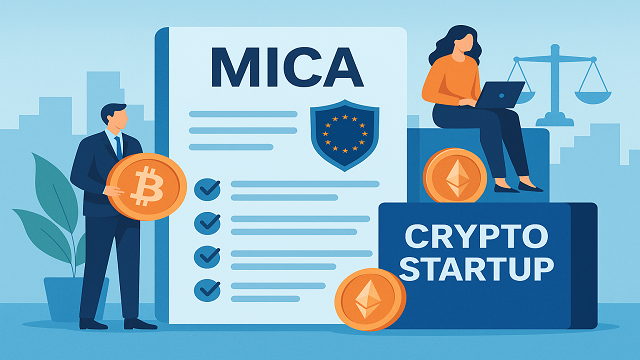
For years, the European crypto market operated under a patchwork of national rules, creating confusion for startups, investors, and regulators. Some countries embraced digital assets with open arms, while others maintained strict restrictions, forcing entrepreneurs to navigate a complex and often contradictory legal landscape. In 2025, the European Union’s new Markets in Crypto-Assets Regulation (MiCA) has come into effect, introducing a single, harmonized framework across all member states.
This marks a turning point not only for Europe but also for the global crypto industry. For the first time, startups in Europe can operate under one consistent set of rules, giving them clarity and stability. At the same time, MiCA imposes stricter requirements, meaning companies must adapt quickly to remain compliant. This article explores what MiCA is, why it matters, and how it will affect crypto startups across the continent.
What is MiCA?
The Markets in Crypto-Assets Regulation (MiCA) is a European Union law designed to regulate digital assets, stablecoins, and crypto service providers. Unlike traditional securities laws, MiCA was built specifically for crypto, addressing issues such as token issuance, exchange operations, and investor protection.
The regulation was passed in 2023 after years of debate and officially came into force in 2024, with full implementation rolling out in 2025. It applies to all 27 EU countries, creating one of the largest unified crypto markets in the world.
For startups, this is both an opportunity and a challenge. On one hand, MiCA eliminates the need to obtain separate licenses in each country. On the other hand, it introduces new compliance obligations that many small teams may find difficult to meet.
Why MiCA Matters for Startups
MiCA fundamentally reshapes how startups approach product launches, fundraising, and expansion in Europe. Previously, a project issuing tokens in France might have faced entirely different requirements compared to one in Germany or Spain. Now, a single approval under MiCA gives access to the entire EU market of nearly 450 million people.
This “passporting” system is particularly valuable for startups seeking rapid growth. Instead of dealing with fragmented regulations, companies can scale across Europe with greater efficiency. Investors also gain confidence knowing that startups operate under a transparent and standardized regime.
However, MiCA also raises the bar for compliance. Startups must implement stricter AML (Anti-Money Laundering) measures, maintain capital reserves, and provide detailed disclosures when issuing tokens. For underfunded projects, meeting these requirements could be a barrier to entry.
Key Provisions Startups Need to Know
MiCA introduces several provisions that directly impact how startups operate:
-
Licensing: Crypto asset service providers, such as exchanges and custodians, must obtain a MiCA license to operate legally across the EU.
-
Whitepaper Requirements: Any project issuing tokens must publish a detailed whitepaper with disclosures about the project’s purpose, risks, and tokenomics.
-
Stablecoin Regulation: Issuers of stablecoins face stricter rules, including capital backing and redemption rights for holders.
-
Consumer Protection: Startups must prioritize investor safety, ensuring that users are fully informed and protected from fraud.
-
Market Abuse Prevention: Rules are in place to prevent insider trading, price manipulation, and unfair practices.
For many startups, these provisions mean additional legal costs, compliance departments, and ongoing audits. However, the trade-off is greater trust from users and investors.
Opportunities Under MiCA
While compliance may feel burdensome, MiCA also opens doors for startups. By creating a level playing field, the regulation reduces uncertainty and encourages legitimate businesses to thrive. Startups that embrace MiCA can benefit from:
-
Greater Investor Confidence: Compliance with MiCA signals professionalism and reduces the stigma of “unregulated” crypto.
-
Access to Institutional Capital: Banks, venture funds, and traditional investors are more likely to support startups operating within a regulated environment.
-
Cross-Border Expansion: Startups can scale across Europe without the hassle of multiple licenses.
-
Global Recognition: The EU’s leadership in crypto regulation could inspire other regions to adopt similar frameworks, giving compliant startups an advantage worldwide.
Challenges and Criticisms
Not everyone in the crypto community welcomes MiCA with open arms. Critics argue that the regulation favors larger companies with more resources, while smaller startups may struggle with the cost of compliance. For example, publishing a legally sound whitepaper or maintaining reserve capital can be expensive for early-stage projects.
There are also concerns that MiCA’s strict approach could stifle innovation, especially in decentralized finance (DeFi). Some provisions appear better suited for centralized entities, leaving open questions about how DAOs (Decentralized Autonomous Organizations) and permissionless protocols will fit into the framework.
Additionally, the regulation’s one-size-fits-all model may not account for the diversity of blockchain projects, potentially forcing startups into rigid structures that don’t align with their business models.
What Crypto Startups Should Do Next
For startups operating or planning to launch in Europe, the message is clear: compliance with MiCA is no longer optional. The first step is to consult with legal experts to understand licensing requirements and ensure proper documentation. Startups should also review their tokenomics and consider whether they fall under stablecoin rules or utility token frameworks.
Building compliance into the business model from day one will be essential. This may involve hiring compliance officers, implementing strong KYC/AML systems, and working closely with regulators. While this adds costs, it also strengthens the company’s credibility and long-term prospects.
Conclusion
The introduction of MiCA represents a landmark moment in the evolution of crypto regulation. By harmonizing rules across the European Union, it provides startups with unprecedented access to one of the world’s largest markets. At the same time, it raises the bar for transparency, security, and investor protection.
For startups willing to embrace regulation, MiCA offers a pathway to legitimacy, funding, and growth. For those unprepared, it could create significant obstacles. Either way, MiCA is here to stay, and its impact will shape the future of Europe’s crypto ecosystem for years to come.
Frequently Asked Questions About – Europe’s MiCA Regulation: What It Means for Crypto Startups
Q1. When does MiCA officially take effect?
Answer: MiCA was passed in 2023, entered into force in 2024, and is being fully implemented across the EU in 2025.
Q2. Does MiCA apply to all cryptocurrencies?
Answer: Yes, MiCA covers a wide range of digital assets, including utility tokens, stablecoins, and asset-referenced tokens. However, it does not replace securities laws, which still apply to tokenized securities.
Q3. How does MiCA benefit crypto startups?
Answer: Startups gain access to the entire EU market through a single license, eliminating regulatory fragmentation and improving investor trust.
Q4. What are the risks of non-compliance with MiCA?
Answer: Non-compliant startups may face fines, legal action, and restrictions on operating in EU countries. This could also damage credibility with investors.
Q5. Will MiCA influence global crypto regulation?
Answer: Yes. The EU is the first major economic bloc to introduce such comprehensive legislation, and other countries are closely watching. It could inspire similar regulations in Asia, North America, and beyond.